

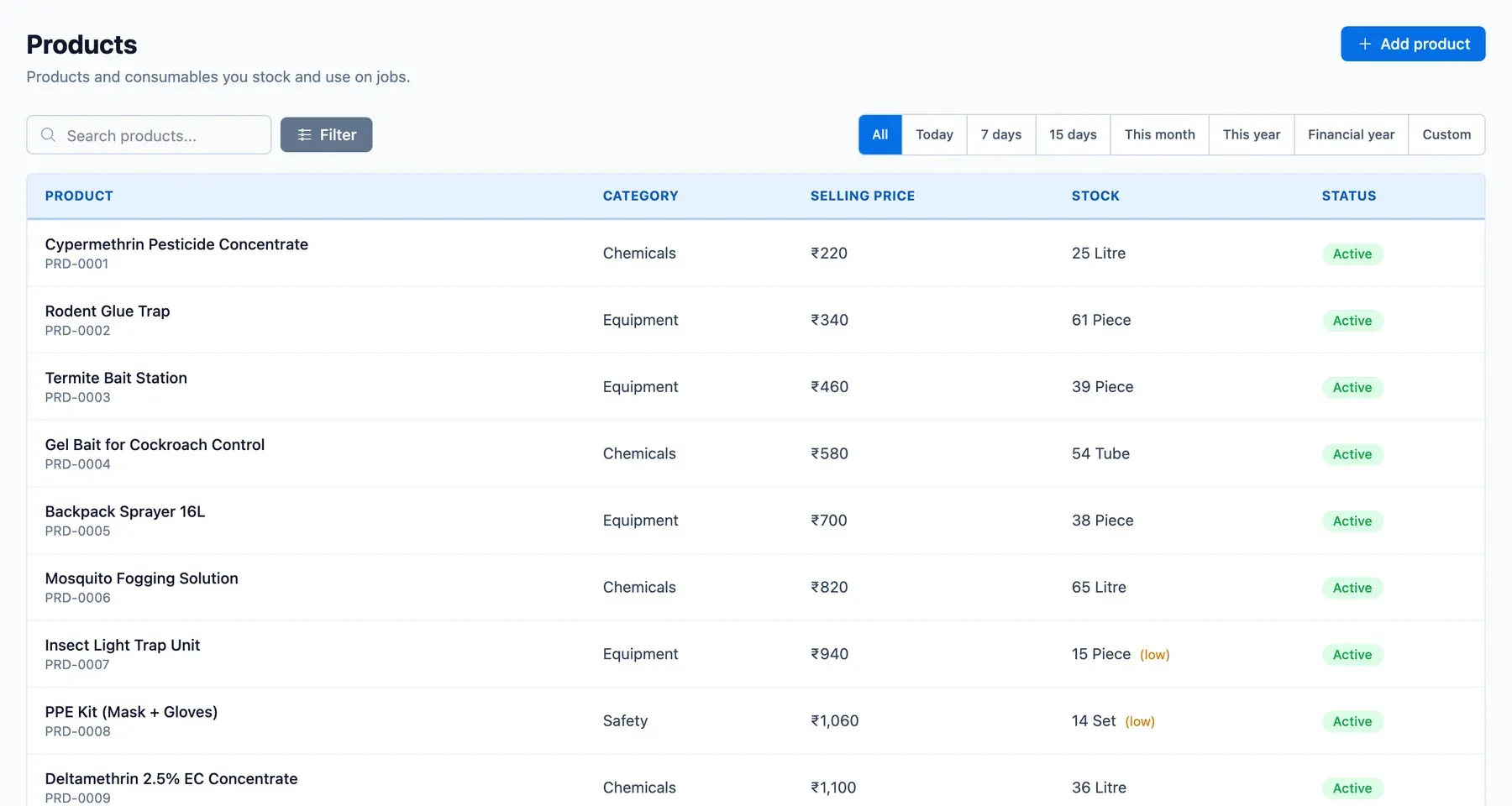
A technician stuck without the right filter makes two visits out of one. Inventory in a service business is not a warehouse system; it is making sure the right part is in the van, and that someone pays the vendor for it.
Inventory: products and vendors
- Products with category, brand, variants, unit and tax, and alternates where a part can be replaced by another.
- Vendors with contacts and tags, and the products they supply.
- Attachments such as datasheets and photos.
Buy, receive and pay
Raise a purchase order, record a goods receipt against it when the delivery arrives, and enter the supplier invoice. Every receipt and issue is a stock movement, so the balance can always be explained.
Parts used on jobs
When a technician uses material at a visit it is recorded on the job. The cost then shows up in margin and the stock movement log without a second entry.
From purchase to job
- Raise a purchase order to a vendor.
- Receive goods and check them.
- Issue parts to technicians or to jobs.
- Record usage on the job and bill it.
Illustrative example: an RO service business
A business in Chennai buys membranes and cartridges from two vendors. A purchase order goes out on Monday, goods are received on Thursday, and the stock list shows the new balance. Technicians record each filter change on the job, so Friday's report shows consumption by service.
Who it is for
Teams that fit parts or sell equipment, such as RO, AC and CCTV.